Projects
Detailed breakdowns of my most recent engineering projects and decisions.
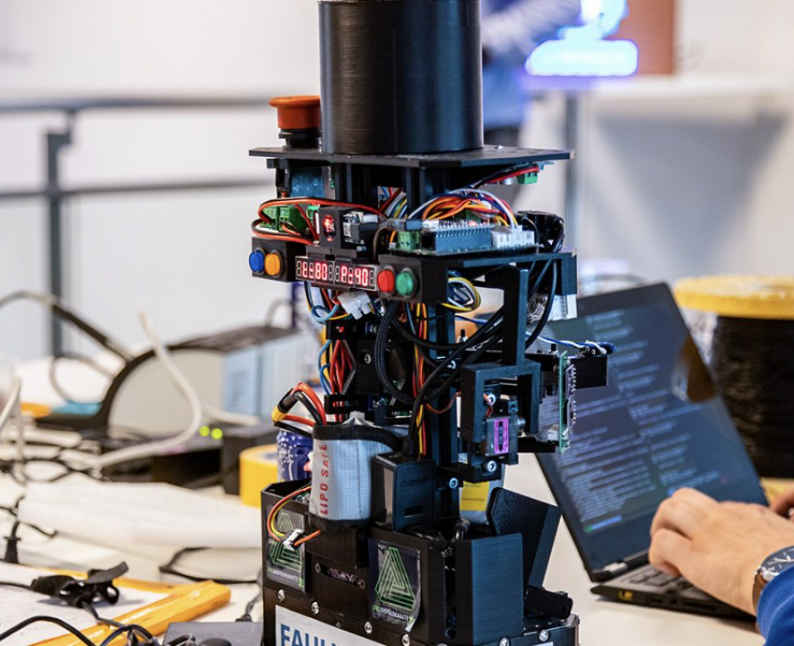
RC Rover
This project was part of my onboarding process for one of my clubs, where we worked in a group to design and build a rover from the ground up. The purpose wasn’t just to assemble a robot, but to create a system capable of completing specific tasks at the end as part of a small competition. We had to make sure our rover could move reliably and interact with its environment, which pushed us to think beyond just building and focus on functionality. Throughout the process, I worked with my team on assembling the chassis, wiring the electronics, and testing performance. It was a hands-on introduction that helped me understand how different components come together in a real, working system.
Technical Details
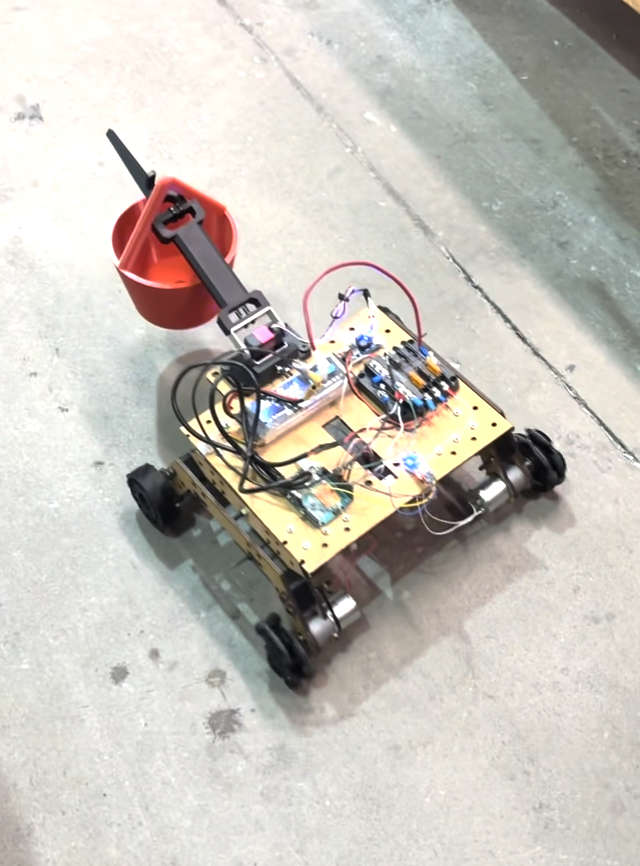
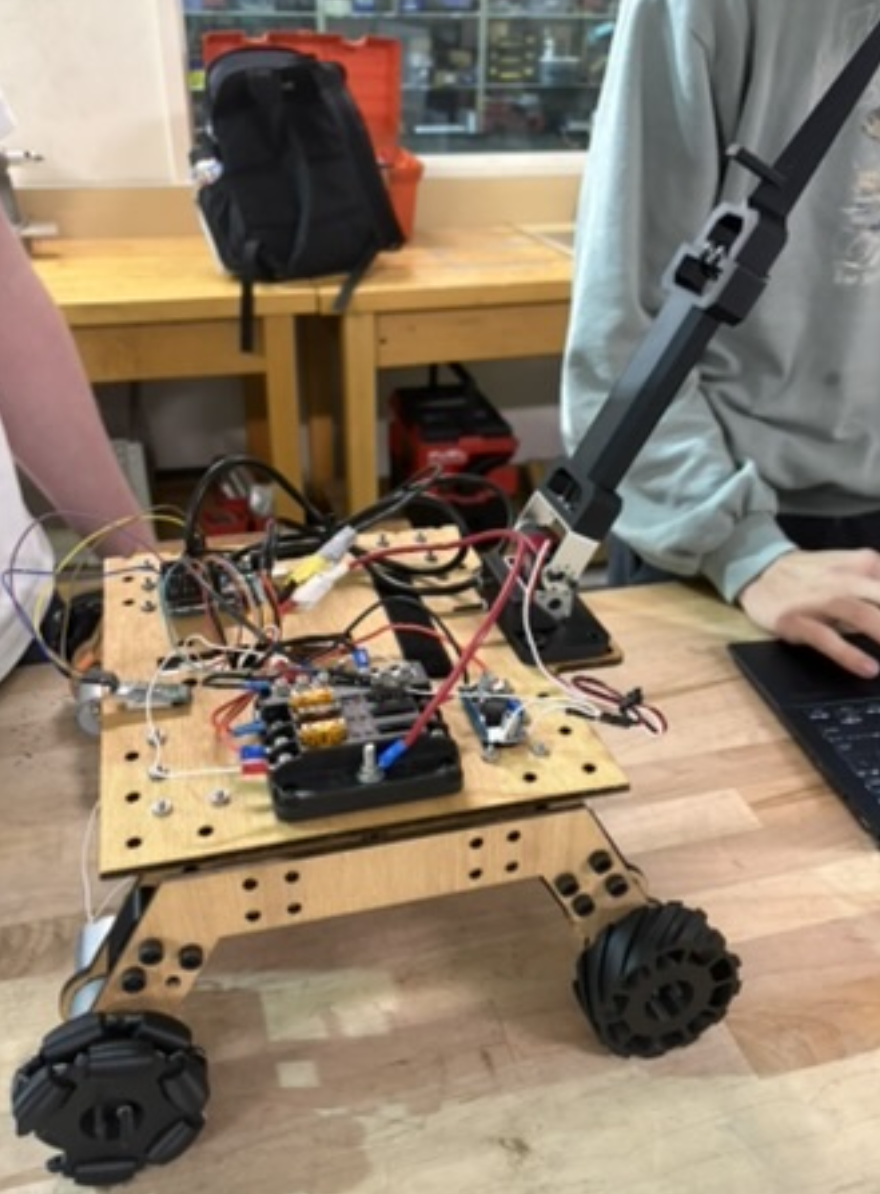
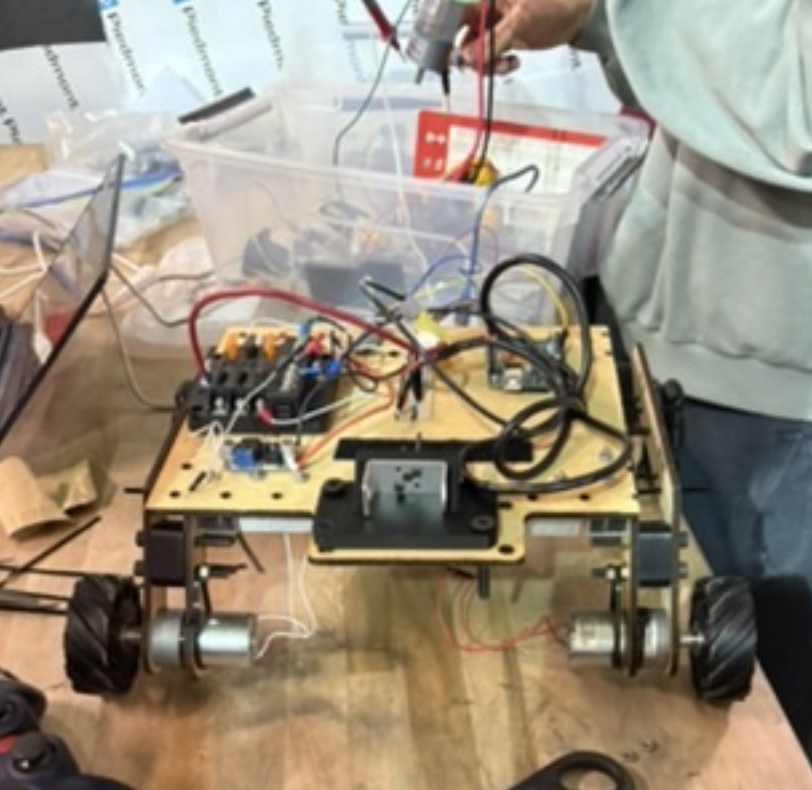
The rover was built on a wooden chassis with a four-wheel drive system powered by DC motors, which provided stability and consistent movement. We used an Arduino-based microcontroller to control the system, sending signals to an L298N motor driver that handled the higher current required by the motors. Power was supplied through a battery pack and distributed using terminal blocks, jumper wires, and a breadboard for easier prototyping and modifications. We also used basic switches to control power and functionality during testing. The robotic arm was driven by multiple servo motors, which were controlled using PWM signals from the Arduino. Integrating the arm required careful coordination between hardware and control signals. Since all wiring was done manually, it gave me a much better understanding of how each component connected and how signals and power flowed through the system.
Reflection
One of the biggest challenges was troubleshooting the wiring, since even a small mistake like a loose connection or incorrect pin placement could stop the entire system from working. There were several instances where we had to carefully trace wires and test components like the motor driver, Arduino, and servos individually to isolate the issue. I also learned how important proper power distribution is, especially when multiple components are running at the same time and drawing different amounts of current. Keeping the wiring organized made a huge difference in debugging efficiency. Working in a group also helped me improve communication and learn how to divide tasks effectively. Overall, I became much more comfortable working with real components and developed a more structured approach to problem solving instead of relying on guesswork.
PID Motion Sensor
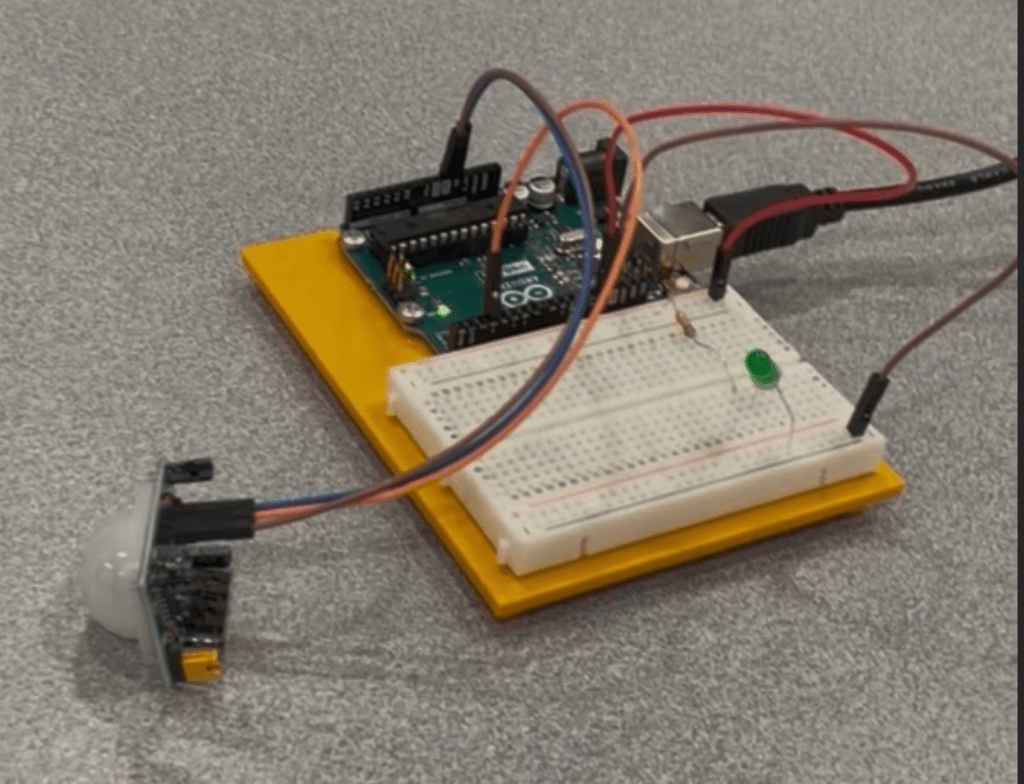
This project was part of a high school engineering assignment where we were introduced to control systems and basic feedback loops. The goal was to design a simple system that could detect motion and respond in a controlled way, rather than just turning something on or off. I worked on building a small setup using an Arduino and a motion sensor, where the output would change depending on detected movement. This project was meant to help us understand how real systems adjust based on input, similar to how automated systems work in everyday applications.
Technical Details
For this project, I used an Arduino Uno as the main controller along with a PIR motion sensor to detect movement. The circuit was built on a breadboard using jumper wires, and I included an LED as the output to visualize the system’s response. The Arduino read signals from the sensor and used simple logic to adjust how the LED behaved based on motion detection. While it wasn’t a full PID implementation, it introduced the idea of responding to input in a controlled and adjustable way. Writing the code helped me understand how sensor data is processed and translated into physical output.
Reflection
One of the main challenges was getting the sensor readings to be consistent, since the motion sensor could sometimes be sensitive or delayed. I had to test different setups and adjust the code to make the response more reliable. This project helped me better understand how sensors interact with microcontrollers and how small changes in code can affect behavior. It also improved my confidence working with breadboards and basic circuits. Overall, it gave me a solid introduction to feedback systems and how engineers design systems that respond to real-world inputs.
 Sai Tarun Alwala - Portfolio